Chapter 03 · 10 min read
Panch Kedar
The Pandavas' Trail Through the Himalayas
Sacred Waters · September 2026
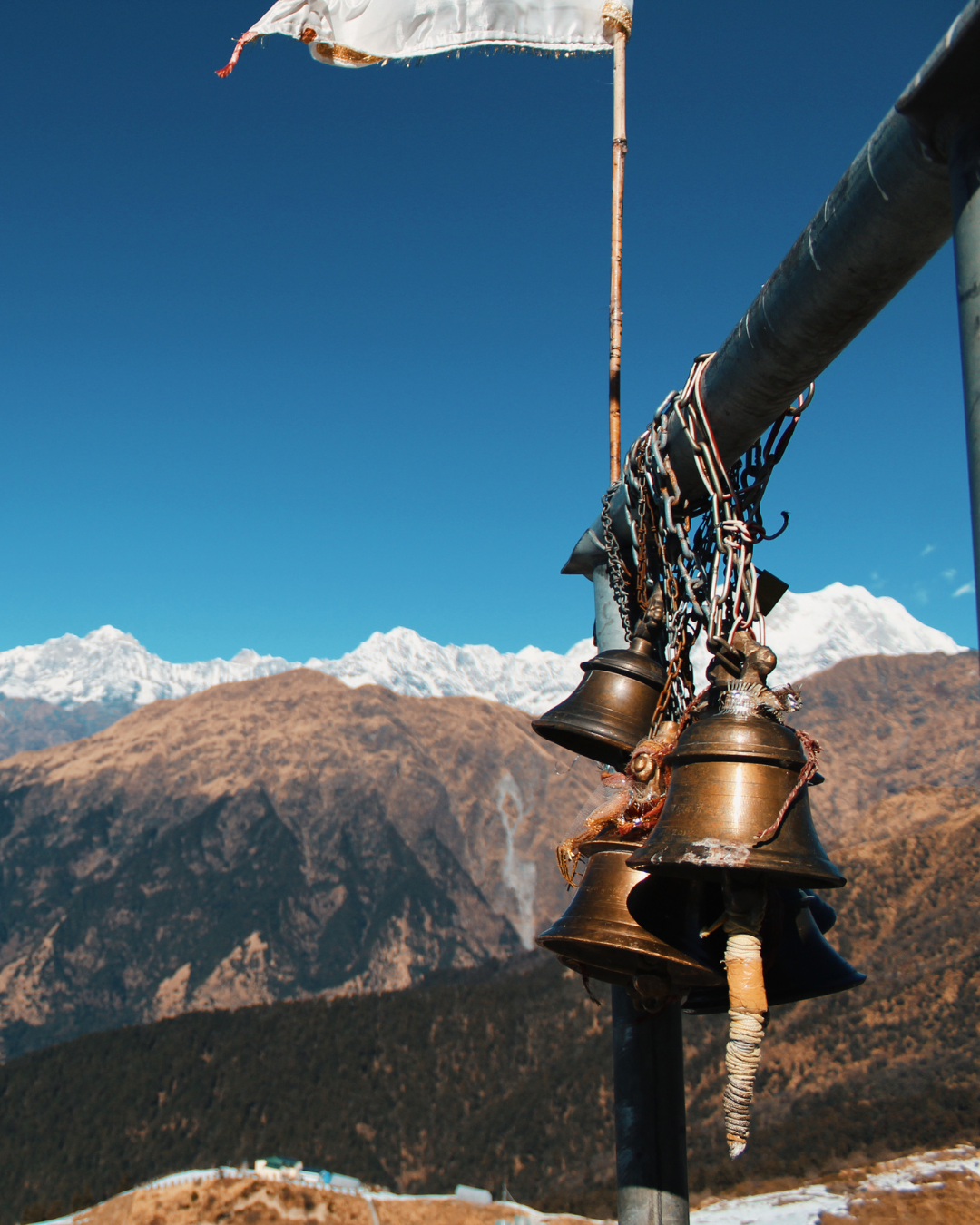
Some pilgrimages begin with a prayer. Others begin with a story. The Panch Kedar pilgrimage begins with both. High in the Garhwal Himalayas of Uttarakhand, five ancient temples are traditionally associated with Lord Shiva and the story of the Pandavas. Together, Kedarnath, Tungnath, Rudranath, Madhyamaheshwar and Kalpeshwar form the Panch Kedar, one of the most extraordinary Shaivite pilgrimage traditions in the Himalayas. But Panch Kedar is more than a collection of five temples. It is a journey through forests, valleys, meadows and mountains. It is a journey shaped by mythology, physical effort and the quiet persistence of generations of pilgrims. And perhaps most importantly, it is a journey that asks you to walk slowly enough to understand why people have been walking these mountains for centuries.
The Story Behind Panch Kedar
According to Hindu tradition, the story of Panch Kedar begins after the great Mahabharata war. The Pandavas had won the war, but victory did not bring them peace.
They were troubled by the consequences of the conflict and the lives that had been lost. Seeking forgiveness and the blessings of Lord Shiva, they travelled towards the Himalayas in search of him. Shiva, however, was reluctant to meet them. According to the traditional legend, he took the form of a bull and attempted to remain hidden among the mountains. The Pandavas recognised him. When Bhima tried to catch the bull, Shiva disappeared into the earth. Different parts of the divine form are then believed to have appeared at different places in the Garhwal Himalayas. These became the five sacred temples of Panch Kedar. The hump is associated with Kedarnath.
The arms with Tungnath. The face with Rudranath. The navel and stomach with Madhyamaheshwar. And the matted hair with Kalpeshwar. Whether one approaches the story through faith, mythology or cultural history, it gives the pilgrimage a powerful narrative thread. You are not simply travelling from one temple to another. You are following a story through the mountains. What Makes the Panch Kedar Pilgrimage Different?
There are many important Shiva temples in India. But Panch Kedar has a particular character. The temples are spread across the highlands of Uttarakhand, and traditionally reaching them requires walking through Himalayan terrain. This changes the nature of the pilgrimage. A temple in a city can be reached through streets. A mountain shrine asks you to cross the landscape first. You walk through forests. You climb. You descend.
You cross streams. You pass through villages. The weather changes. The body becomes tired. And gradually, the journey itself becomes part of the prayer. That may be one of the reasons Himalayan pilgrimage feels so different from visiting a temple as a tourist attraction. The landscape does not simply surround the temple. It prepares you for it.
Kedarnath
Where the Journey Begins
Kedarnath is the most famous of the Panch Kedar temples and one of India's most important Shiva pilgrimage sites. Located at a high altitude in the Garhwal Himalayas, the temple stands against a dramatic mountain landscape. For many pilgrims, reaching Kedarnath is an achievement in itself. The modern route has changed over time, particularly after the devastating floods of 2013, but the essential character of the journey remains one of physical effort and devotion. People arrive from different backgrounds and with different reasons.
Some have been planning the pilgrimage for years. Some come because their parents or grandparents once came here. Some arrive carrying prayers for someone else. And some simply want to stand in a place they have heard about since childhood. The temple may be the destination. But the road towards it becomes part of the memory.
Tungnath
Shiva Above the Clouds
Higher in the Himalayas stands Tungnath, traditionally regarded as the highest of the Panch Kedar temples. The journey to Tungnath passes through the remarkable landscape of the Chopta region. Here, the relationship between temple and mountain becomes especially striking. There is a point during the climb when the noise of ordinary life seems to fall away. The road disappears. The trees change. The horizon opens. The air becomes cooler. And the temple begins to feel less like something constructed in the landscape and more like something belonging to it. For pilgrims, reaching Tungnath can be both physically demanding and deeply rewarding.
You may arrive tired. You may arrive breathless. But there is something humbling about looking around and realising how small you are within the landscape.
Rudranath
Shiva in the Wilderness
Of the Panch Kedar temples, Rudranath can feel particularly remote. The temple is set amid alpine meadows and rugged Himalayan terrain, surrounded by a landscape that feels far removed from ordinary urban life. The traditional association here is with the face of Shiva. But beyond mythology, Rudranath offers something increasingly rare. Silence. There are no crowded city streets immediately outside the temple. No constant movement of traffic.
Instead, there are mountains, forests, open skies and the sounds of the natural world. For someone accustomed to travelling quickly, this can take some adjustment. At Rudranath, there is little to do except walk, observe and be present. And perhaps that is precisely the point.
Madhyamaheshwar
Shiva in the Valley
Madhyamaheshwar is associated with the navel and stomach of Shiva in the Panch Kedar tradition. The temple lies in a beautiful Himalayan valley surrounded by peaks. The journey towards it takes pilgrims through villages, forests and mountain landscapes. As with the other Panch Kedar temples, the route cannot be separated from the destination. The journey is not simply the difficult part before the reward. The journey is the experience. The conversations along the trail. The people you meet. The simple meals.
The sound of your own footsteps. The changing weather. The moment you stop because you are tired and look back at how far you have come. These are often the memories that remain.
Kalpeshwar
The Quietest Kedar
Unlike the other four Panch Kedar temples, Kalpeshwar is accessible throughout much of the year. The shrine is associated with the matted hair of Shiva. Set within a more enclosed landscape, the temple has a different atmosphere from the exposed Himalayan shrines. It can feel intimate. Almost hidden. And after the scale of the mountains encountered elsewhere on the pilgrimage, that intimacy can be deeply moving. Not every sacred experience needs to be dramatic.
Sometimes the most memorable places are the ones where you find yourself standing quietly with very little around you.
The People Along the Trail
It is easy to tell the story of Panch Kedar entirely through mythology. But there is another story happening at the same time. The story of the people who live in these mountains. Porters. Local guides. Priests. Village families. Shopkeepers. Drivers. Caretakers. Communities whose lives are connected to the landscape long after a pilgrim has returned home. For travellers, these encounters can become some of the most meaningful parts of the pilgrimage.
A cup of tea after a difficult climb. A local person pointing out the route. A conversation with a temple caretaker. Someone explaining a tradition that you would never have understood from a guidebook. These moments remind us that sacred landscapes are living landscapes. They belong to communities as much as they belong to stories.
Panch Kedar and the Meaning of Effort
Modern travel often tries to remove difficulty. We want comfortable roads. Fast transport. Convenient schedules. Panch Kedar offers a different experience. Here, effort remains visible. You feel the climb. You notice the altitude. You become aware of the weather. You learn to listen to your body. And slowly, effort itself can begin to acquire meaning. A difficult journey does not automatically become a spiritual one. But difficulty can create space for reflection. When you cannot think about emails, deadlines or everyday responsibilities because you are concentrating on your next step, your mind becomes quieter.
You are simply walking. One step. Then another. Then another.
A Pilgrimage Through the Living Himalayas
The Panch Kedar temples are not isolated monuments. They exist within one of India's most ecologically sensitive landscapes. The forests, rivers, meadows and villages are all part of the pilgrimage experience. This means that travelling responsibly matters. Carry waste back with you. Avoid damaging vegetation. Respect local water sources. Follow designated trails. Do not treat wildlife or local communities as attractions. And be conscious of how pilgrimage and tourism affect fragile mountain environments.
The goal should not be to conquer the Himalayas. The Himalayas are not something to conquer. They are something to enter with humility.
When to Undertake the Panch Kedar Pilgrimage
The Panch Kedar temples are located in high Himalayan terrain, and access is strongly influenced by weather and seasonal conditions. The main pilgrimage season is generally associated with the warmer months, while several temples close during winter because of heavy snowfall and difficult access. Temple opening and closing dates can vary annually according to traditional calendars and local conditions. Anyone planning a Panch Kedar pilgrimage should therefore check current temple schedules, weather, trail conditions and local guidance before travelling. This is especially important because the five temples do not all have identical access conditions. The pilgrimage should be approached as a mountain journey rather than an ordinary sightseeing trip.
Physical preparation matters. So does flexibility. And so does respect for the mountains.
Travelling the Pandavas' Trail
Perhaps the most moving aspect of Panch Kedar is the story at its centre. The Pandavas won. Yet they still carried guilt. They had achieved what they wanted, but victory did not erase the consequences of what had happened. So they walked. They searched for Shiva. They crossed the mountains. They looked for forgiveness. Whether understood literally or symbolically, the story speaks to something deeply human. Sometimes we achieve what we thought we wanted and still feel unsettled. Sometimes we carry things that nobody else can see. Sometimes we need to leave familiar surroundings to understand what we have been carrying all along. That makes the Pandavas' journey surprisingly relatable, even centuries after the story was first told.
What the Pilgrim Carries Home
A Panch Kedar pilgrimage does not end when you leave the mountains. You carry the trail with you. Perhaps you remember the first sight of a snow covered peak. Perhaps it is the sound of temple bells in the morning. Perhaps it is a meal shared with other pilgrims. Perhaps it is the kindness of someone who helped you on the trail. Perhaps it is simply the feeling of being tired, cold and completely present.
The mountains may also leave you with something less tangible. Perspective. When you have spent days walking beneath enormous peaks, everyday problems can begin to feel different. Not necessarily smaller. But clearer.
The Five Forms of One Journey
Kedarnath. Tungnath. Rudranath. Madhyamaheshwar. Kalpeshwar. Five temples. Five landscapes. Five expressions within one Shaivite tradition. Yet the pilgrimage connecting them is larger than the individual shrines. It is a journey through mythology, mountains, communities and the inner life of the pilgrim. The Pandavas searched for Shiva. Generations of pilgrims have followed their trail. And today, people continue to walk these same mountains carrying their own stories. Perhaps that is the enduring power of Panch Kedar.
The mountains do not ask what brought you here. They simply receive you. You walk. You listen. You struggle. You pray. You continue. And somewhere along the trail, the distinction between travelling towards a sacred place and travelling within yourself begins to disappear. That is when a mountain journey becomes a pilgrimage.