Chapter 02 · 14 min read
The Twelve Jyotirlingas
Shiva as Infinite Light
Sacred Waters · September 2026
There are places we visit because they are beautiful. There are places we visit because they are ancient. And then there are places we visit because generations of people have believed that something sacred lives there.
The Twelve Jyotirlingas belong to the last kind. Spread across India, these twelve sacred shrines are dedicated to Lord Shiva and are traditionally believed to represent manifestations of Shiva as a Jyotirlinga, a column or form of divine light. For many devotees, visiting the Jyotirlingas is not simply about seeing twelve temples. It is about following a trail of faith across a country.
From the shores of Gujarat to the mountains of Uttarakhand, from the ancient city of Varanasi to the forests of Jharkhand, each Jyotirlinga has its own landscape, mythology, rituals and living traditions. Together, they tell a much larger story. A story about Shiva. A story about devotion. And perhaps, most importantly, a story about how the sacred can take many forms while remaining one.
What Is a Jyotirlinga?
The word Jyotirlinga comes from two Sanskrit concepts, jyoti, meaning light or radiance, and linga, referring to the symbolic form through which Shiva is worshipped. According to Hindu tradition, the origin of the Jyotirlinga is connected with a story in which Shiva appears as an endless pillar of light, revealing a reality beyond human measurement and comprehension. Brahma and Vishnu are traditionally described as attempting to discover the beginning and end of this infinite manifestation. Neither could find it. The story is simple, but its meaning is profound. Some things cannot be measured. Some truths cannot be reached by searching for their boundaries. And perhaps that is what the Jyotirlingas represent. Not twelve different Shivas. But twelve sacred manifestations of something understood as infinite.
The Twelve Jyotirlingas Across India
The traditional list of twelve Jyotirlingas takes the pilgrim across an extraordinary geographical and cultural landscape:
- Somnath Gujarat
- Mallikarjuna Andhra Pradesh
- Mahakaleshwar Madhya Pradesh
- Omkareshwar Madhya Pradesh
- Kedarnath Uttarakhand
- Bhimashankar Maharashtra
- Kashi Vishwanath Uttar Pradesh
- Trimbakeshwar Maharashtra
- Vaidyanath Jharkhand
- Nageshwar Gujarat
- Rameshwaram Tamil Nadu
- Grishneshwar Maharashtra
The pilgrimage therefore cannot be understood only through temples. It is also a journey through India itself. Different landscapes. Different languages. Different food. Different architectural traditions. Different communities. Yet a shared devotion connects them.
Somnath
Shiva Beside the Sea
On the western coast of Gujarat stands Somnath, one of India's most revered Shiva temples. The temple rises beside the Arabian Sea, creating an extraordinary meeting of landscape and devotion. Here, the sea becomes part of the experience. Waves move continuously beyond the temple while pilgrims arrive, pray and leave. There is something fitting about encountering Shiva beside an endless body of water. The temple has a long and complex history of destruction and reconstruction, and its present form represents one chapter in that continuing story. For the pilgrim, however, the significance of Somnath is not only found in its history. It is also in continuity. The temple has been rebuilt. The worship continues. The prayers continue.
The sea continues to move beside it.
Mallikarjuna
Shiva in the Nallamala Hills
Further south lies Mallikarjuna Jyotirlinga at Srisailam in Andhra Pradesh. Set among the Nallamala hills, the temple is associated with both Shiva and Goddess Parvati and is one of the most important pilgrimage centres in southern India. The journey towards Srisailam itself becomes part of the experience. The landscape gradually changes. The city recedes. The hills and forests become more present. And the pilgrim begins to understand that pilgrimage is not always about reaching the temple quickly. Sometimes the landscape prepares you for it.
Mahakaleshwar
Shiva and the Mystery of Time
In Ujjain stands Mahakaleshwar, one of the most important Jyotirlingas and a particularly significant centre of Shaivite worship. Here, Shiva is worshipped as Mahakal, the great Lord of time. Time is something every human being understands. We watch it pass. We try to hold onto it. We wish we could return to it.
And yet it moves without asking permission.
Perhaps this is why the idea of Mahakal carries such emotional weight. At Ujjain, the pilgrim is not only approaching a deity.
They are approaching an ancient reminder that everything changes. Life changes.
People change. Cities change. We change.
Time continues.
Omkareshwar
Shiva on the Sacred Island
On the Narmada River in Madhya Pradesh lies Omkareshwar, traditionally associated with the sacred syllable Om. The temple stands on Mandhata Island, whose shape is traditionally understood to resemble the sacred symbol.
Here, water becomes an important part of the pilgrimage experience. The Narmada flows around the island. Pilgrims move through the landscape. Temples rise along the river.
The relationship between river, island and shrine creates an experience that feels inseparable from the landscape itself. This is one of the recurring qualities of the Jyotirlinga pilgrimage. The sacred does not exist independently of its surroundings. The mountain matters. The river matters. The sea matters. The city matters. The journey matters.
Kedarnath
Shiva in the Himalayas
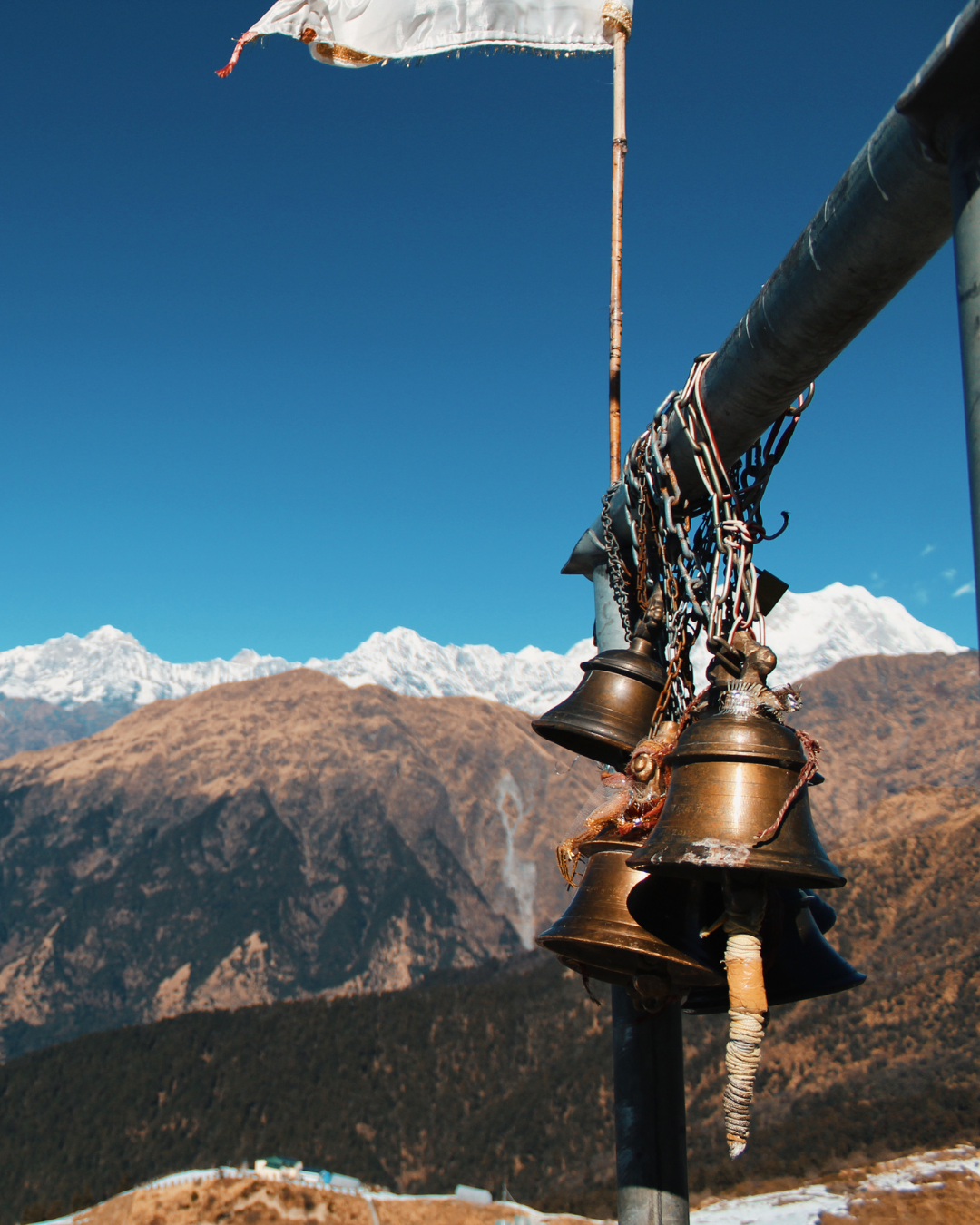
High in Uttarakhand stands Kedarnath, one of the most demanding and revered destinations on the Jyotirlinga trail. The temple sits amid the Himalayas, surrounded by an environment whose scale can make a person feel very small. The journey to Kedarnath has traditionally required physical effort, and that effort forms part of the experience for many pilgrims. You walk. You tire. You stop. You continue. And when the temple finally comes into view, the feeling can be difficult to separate from everything it took to reach it.
Kedarnath reminds us that pilgrimage is sometimes about effort as much as arrival.
The destination matters. But so does every step taken towards it.
Bhimashankar
Shiva Among the Forests
In Maharashtra, Bhimashankar sits within the Sahyadri landscape. The surrounding forests and hills give this Jyotirlinga a different character from the great urban temples of the pilgrimage circuit. Here, the landscape itself becomes part of the experience. The sound of water. The forest. The changing light. The movement between the natural world and the temple. It is a reminder that sacredness does not always arrive through grandeur. Sometimes it is quiet. Sometimes it is green.
Sometimes it is found in the feeling of entering a landscape where nature seems to slow you down.
Kashi Vishwanath
Shiva in the Eternal City
Few places express the relationship between city and pilgrimage as powerfully as Kashi.
In Varanasi, Kashi Vishwanath Temple stands at the heart of one of India's oldest continuously inhabited urban landscapes. Here, pilgrimage is woven into everyday life.
The sacred does not sit apart from the city.
It lives alongside markets, narrow lanes, homes, music, boats, rituals and the Ganga.
A person can turn a corner and suddenly find themselves facing a shrine. A bell rings. A prayer begins. Someone carries flowers.
Someone else is simply going about their day.
This is one of the remarkable things about Kashi. The sacred and ordinary exist beside one another. Perhaps that is why a pilgrimage here can feel less like entering a separate world and more like seeing the ordinary world differently.
Trimbakeshwar
Where River and Pilgrimage Meet
Near Nashik in Maharashtra lies Trimbakeshwar, associated with the origin of the Godavari River. Water once again becomes central to the story. A river begins somewhere small. It gathers strength. It travels. It nourishes communities. And eventually, it becomes part of the lives of millions. To stand near a sacred source is to encounter the beginning of something much larger. For pilgrims, Trimbakeshwar therefore represents not only Shiva but also the sacred relationship between water, land and life.
Vaidyanath
Shiva as Healer
The Jyotirlinga associated with Vaidyanath, traditionally located at Deoghar in Jharkhand, carries another deeply human dimension. Shiva is associated here with healing. And healing is something every human being understands. We pray for ourselves. We pray for parents. For children. For friends. For people we may never meet. Sometimes pilgrimage begins because there is something we want to ask for. Sometimes because there is something we want to surrender. And sometimes because we simply need a place where hope feels possible. This is one of the reasons sacred journeys remain relevant.
They give people somewhere to carry their fears.
Nageshwar
Shiva and Protection
Near the coast of Gujarat lies Nageshwar, another important Shiva shrine traditionally counted among the twelve Jyotirlingas.
The traditions associated with Nageshwar connect Shiva with protection from fear and danger. Fear is a universal human experience. It does not matter how different our lives may be. We all know what it means to worry about something we cannot control. Perhaps this is why the idea of a protective deity remains so powerful. A pilgrim can stand before Shiva carrying a concern that nobody else knows about. The ritual may take only a few minutes.
But the meaning behind it can last much longer.
Rameshwaram
Shiva at the Edge of the Sea
At the southern edge of India lies Rameshwaram, home to Ramanathaswamy Temple and one of the traditional Jyotirlingas.
The temple is closely connected with the Ramayana tradition and occupies a unique place in Hindu pilgrimage. Its vast corridors and sacred water sources create an experience unlike the other Jyotirlingas. Once again, water becomes central. The sea. The temple tanks. The rituals. The movement of pilgrims. Rameshwaram reminds us that sacred geography is often created through relationships between stories and landscapes.
A place becomes meaningful because generations of people have continued to return to it.
Grishneshwar
The Final Shrine
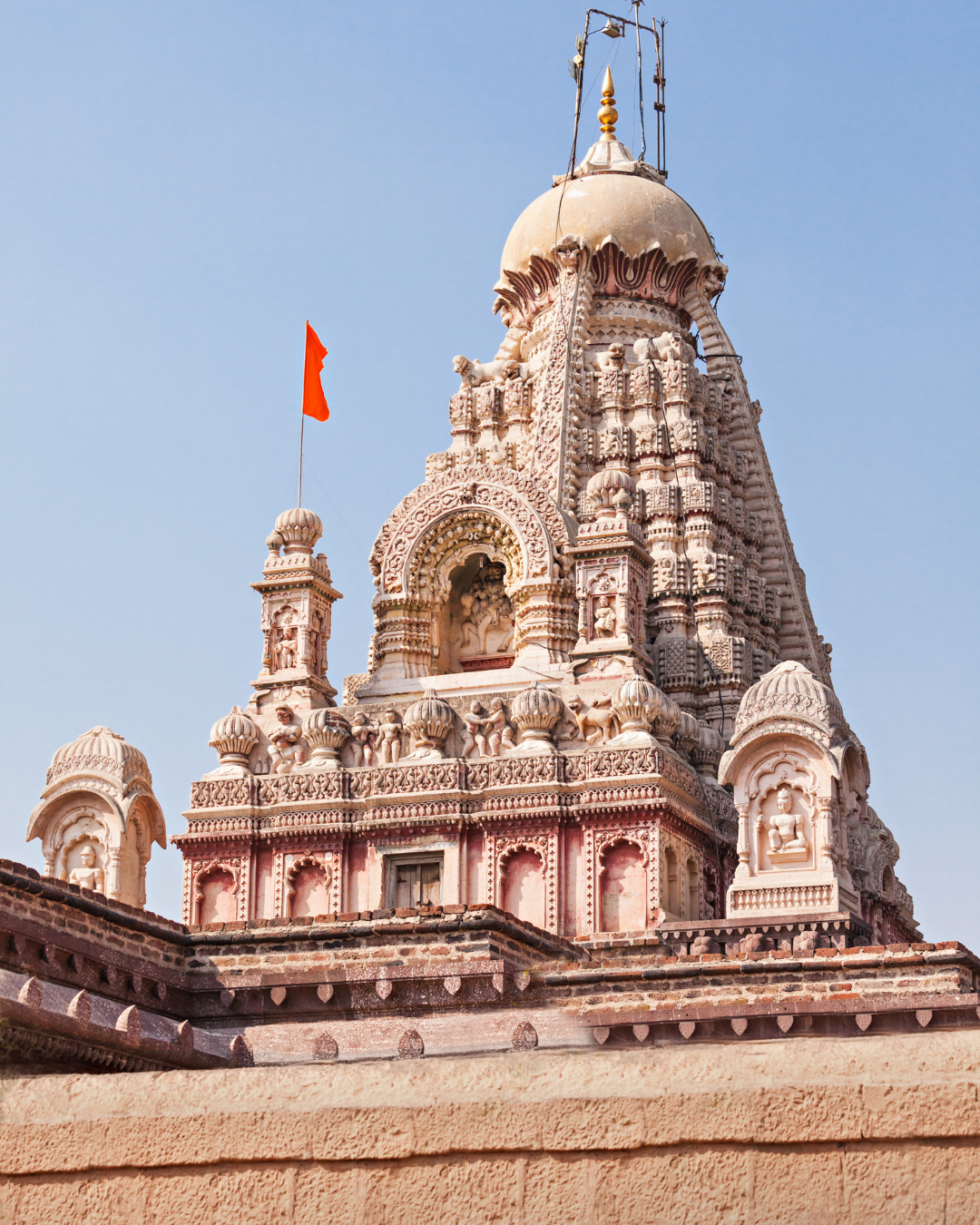
Near Ellora in Maharashtra stands Grishneshwar, traditionally recognised as the twelfth Jyotirlinga. Its proximity to the Ellora caves places the temple within a remarkable cultural landscape shaped by centuries of religious architecture and artistic expression.
Here, the Jyotirlinga pilgrimage meets another layer of India's heritage. Faith. Art. Architecture. History. All occupying the same landscape. And perhaps that is the larger story of the twelve Jyotirlingas. They are not isolated temples. They are part of the cultural fabric of India.
What Does a Jyotirlinga Pilgrimage Really Mean?
It is easy to turn the twelve Jyotirlingas into a checklist. One temple. Then another. Then another. But perhaps that misses the point.
A pilgrimage is not necessarily about collecting destinations. It is about allowing each destination to change something within you. Somnath may teach continuity.
Mahakaleshwar may invite reflection on time.
Kedarnath may teach endurance.
Kashi may make you think about life and death.
Rameshwaram may remind you of the relationship between faith and landscape.
Each shrine has its own story. And each pilgrim brings their own.
Travelling the Jyotirlinga Trail With Respect
Sacred places are living places. They are not museums. People come with prayers, grief, gratitude, vows and deeply personal reasons.
A respectful traveller therefore does more than visit. They observe. They listen. They learn the customs of the place. They dress appropriately where required. They ask before photographing people or rituals. They understand that what looks extraordinary to a visitor may be an ordinary act of devotion for someone who has been practising it all their life. This is especially important when travelling through twelve different sacred landscapes.
The rituals may change. The languages may change. The customs may change. But respect should remain constant.
A Journey Across India
Perhaps the most beautiful way to understand the Jyotirlingas is as a journey across India.
From the Arabian Sea to the Himalayas. From forests to rivers. From ancient cities to coastal temples. From crowded pilgrimage centres to quieter landscapes. Twelve shrines. One tradition. Countless stories. And millions of individual journeys. Some people may spend years completing the circuit. Some may visit one shrine because it is close to home. Some may dream of completing all twelve. There is no single way to undertake a pilgrimage. There is only the way that makes sense for the person walking it.
The Light That Has No Beginning or End
The story of the Jyotirlinga begins with an infinite light. Perhaps that is why the pilgrimage feels larger than a list of temples. The light is not confined to one place. It appears in different landscapes. Different communities. Different rituals. Different generations. And perhaps the deeper lesson is not simply that Shiva is found in twelve places.
It is that the sacred cannot always be contained. You may begin the journey looking for Shiva in a temple. You may find him in the mountain. In the river. In the bells. In the silence before prayer. In the person travelling beside you. Or perhaps in the part of yourself that becomes quieter along the way. The twelve Jyotirlingas offer twelve ways of approaching the same infinite idea.
And when the journey is over, perhaps what remains is not the number of temples you have visited. It is the meaning you carried home.
Because pilgrimage is never only about where we go. It is also about who we become while we are getting there.