Chapter 09 · 6 min read
Stories Behind India's Sacred Temples
Stories of faith, resilience, love and the people who keep them alive.
Sacred Waters · September 2026
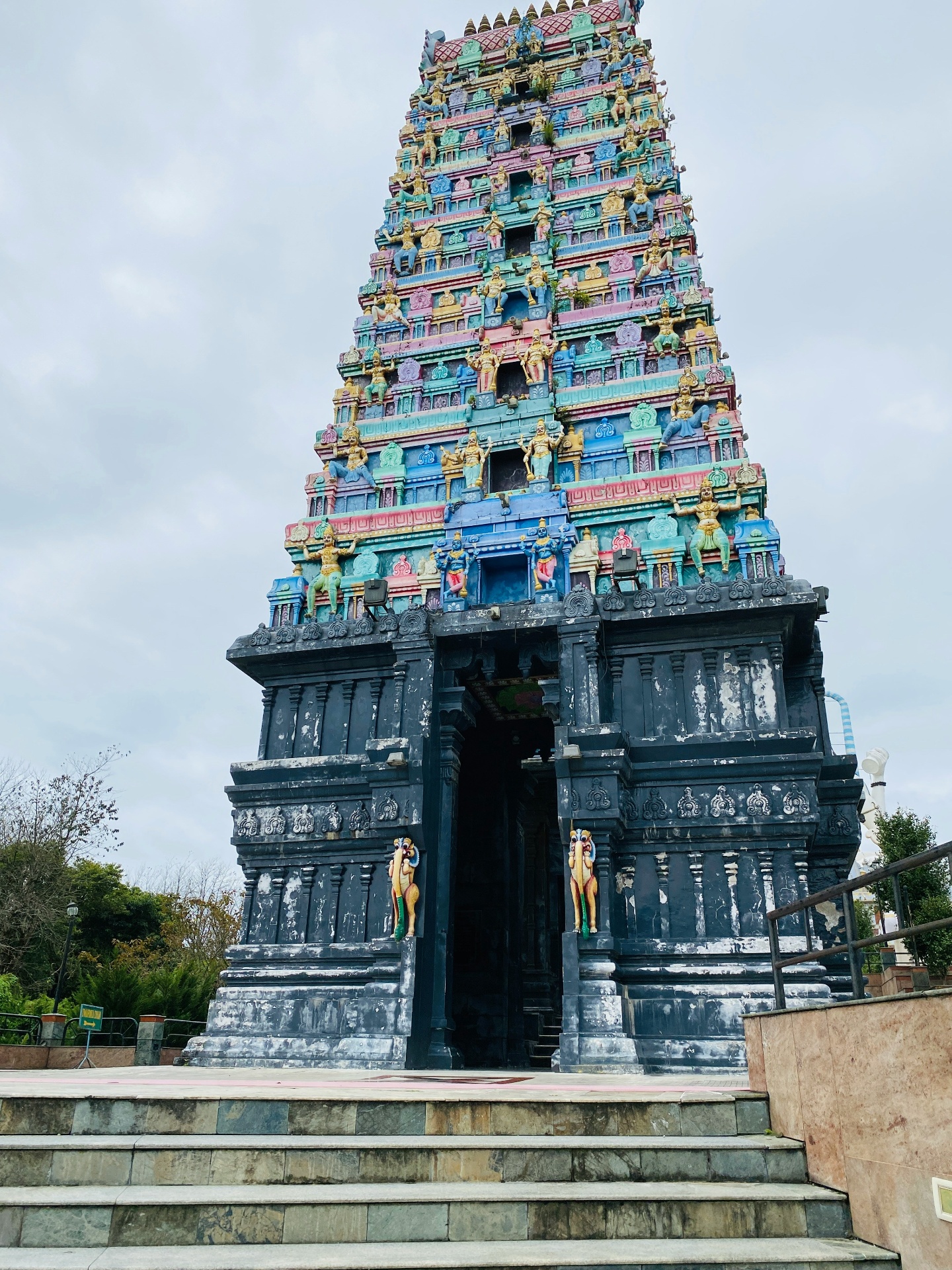
India's temples are not merely places where gods are worshipped. They are places where stories have stayed alive. Stories of gods who disappeared into mountains, kings who rebuilt what was lost, devotees who waited for centuries, and people who walked for days simply to stand before something they believed was greater than themselves. Perhaps that is why a temple can feel strangely familiar even when we enter it for the first time.
Kedarnath
Where Shiva Tried to Disappear
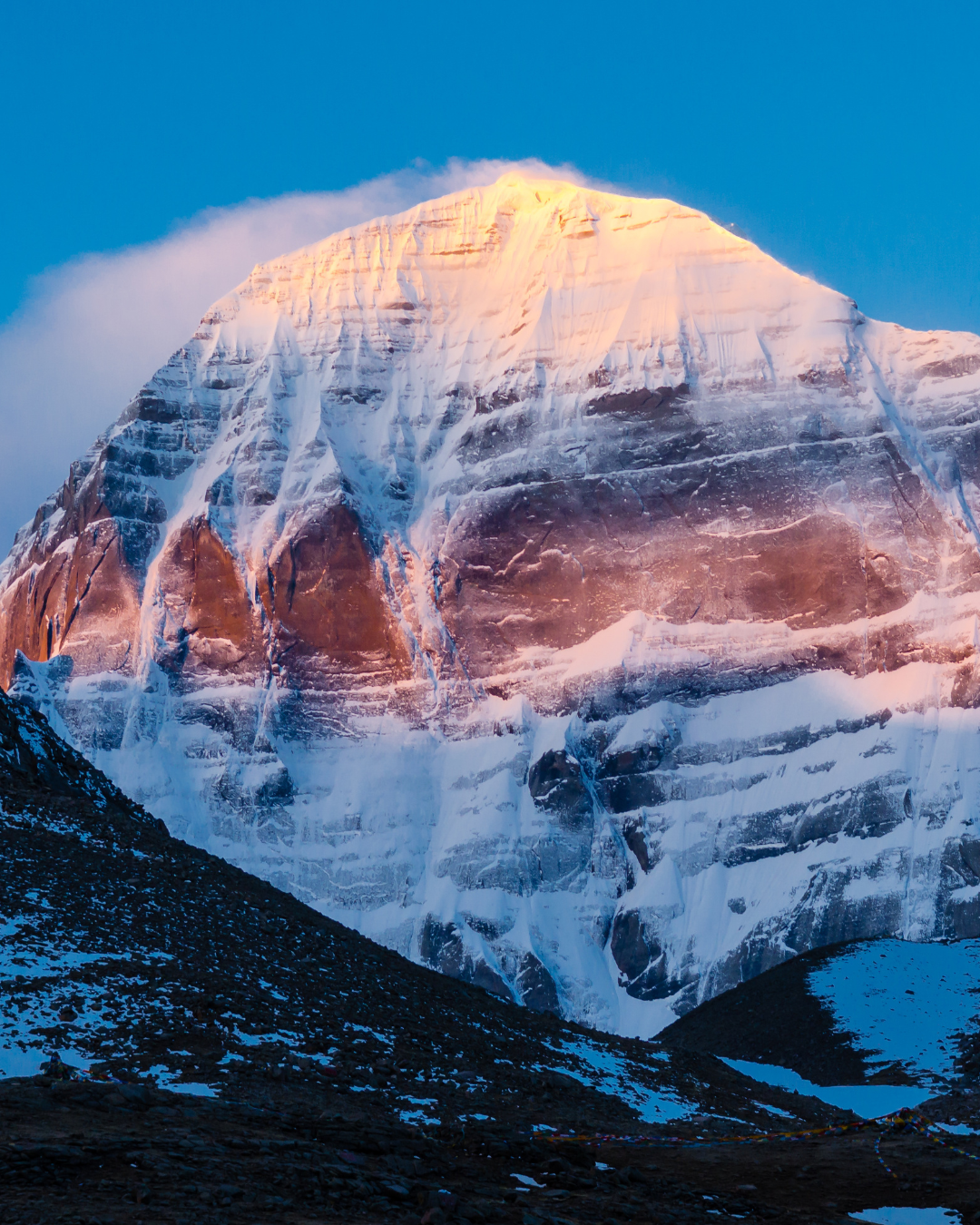
High in the Himalayas, where the air grows thin and the mountains seem to touch the sky, stands Kedarnath. But the story of this temple begins not with a temple, but with a search.
After the great war of the Mahabharata, the Pandavas were overcome by guilt. They had won the war, but victory had come with a terrible price. They wanted Shiva's forgiveness and came looking for him in the Himalayas. Shiva, however, did not wish to meet them. According to the legend, he took the form of a bull and disappeared into the earth.
The Pandavas recognised him and tried to hold on to him as he vanished. What remained became the sacred form worshipped at Kedarnath. Perhaps that is what makes Kedarnath so powerful. People don't only climb the mountain to find God. Sometimes, they climb it carrying their own guilt, grief, questions and things they cannot say aloud.
And somewhere between the difficult climb and the first sight of the temple, they may realise that perhaps the journey was never about finding Shiva. Perhaps it was about finding themselves.
Jagannath, Puri
The God Who Chose an Unfinished Form
At Puri stands a deity unlike most others. Jagannath does not have the familiar, perfectly sculpted form we usually imagine when we think of a god. His large round eyes seem to look directly at you. And his wooden form is deliberately incomplete. There is an ancient legend behind this. A mysterious craftsman agreed to carve the divine form of Jagannath, but asked to be left completely undisturbed while he worked. Days passed. The doors remained closed.
Then, worried that something had happened to the craftsman, the doors were opened before the work was finished. The forms of Jagannath, Balabhadra and Subhadra remained as they were. And that unfinished form became sacred. There is something deeply human about this story. We spend so much of our lives trying to become more successful, more beautiful, more certain, more perfect.
Yet in Puri, millions come to bow before a God who is worshipped in an unfinished form. Perhaps divinity was never asking us to be perfect. Perhaps it was reminding us that being unfinished is also a way of being whole.
Kashi Vishwanath
The City Where Death Is Not the End
There are places where people go to celebrate life. And then there is Kashi. For thousands of years, people have travelled to Varanasi believing that this is a city where the boundary between life and death feels thinner. At its heart stands Kashi Vishwanath, the temple of Shiva, the Lord of the Universe. Kashi is believed to be Shiva's own city.
Ancient tradition holds that those who die here can attain liberation, escaping the endless cycle of birth and death. And perhaps this is why Kashi feels different. You can walk through its narrow lanes and hear temple bells while, only a little farther away, funeral fires burn beside the Ganga.
Life and death do not hide from each other here. They exist side by side. Maybe that is Kashi's quiet lesson. We spend our lives trying not to think about endings. Kashi asks us to look at them and, somehow, find peace.
Somnath
The Temple That Refused to Disappear
On the western coast of Gujarat, where the Arabian Sea stretches endlessly towards the horizon, stands Somnath. Its name is connected with Shiva, the Lord of the Moon. According to the legend, the Moon God was cursed to lose his radiance. He came to this sacred place, worshipped Shiva and regained his light. That is why Somnath is associated with renewal. But the temple itself would go on to live through another kind of cycle.
It was destroyed and rebuilt multiple times across history. Yet each time, worship returned. The stone could be broken. Buildings could fall. But the faith surrounding the temple continued. Standing beside the sea, the story of Somnath feels almost like the rhythm of the waves. Some things disappear. Some things return.
And some things survive simply because people refuse to stop believing in them. Perhaps Somnath is not only a temple of Shiva. Perhaps it is a temple of resilience.
Tirupati
The God Who Came Looking for Love
Every day, thousands of pilgrims climb the hills of Tirumala to see Lord Venkateswara. But behind the famous temple is a surprisingly human story. According to the temple tradition, Vishnu came to Earth in the form of Srinivasa after Lakshmi left him following an incident involving the sage Bhrigu. He eventually settled in the Seshachalam Hills. There, he fell in love with Padmavati.
Their marriage became an important part of the sacred story of Tirumala. But there is another beautiful detail. The legend says that Srinivasa took a loan from Kubera to finance the wedding and that devotees' offerings are connected to the repayment of this divine debt. So when a pilgrim drops a coin into the hundi, it can feel like more than an offering.
It becomes part of a story that has been unfolding for centuries. Perhaps that is why people give so freely at Tirupati. Sometimes we give to God not because God needs our money, but because giving is our way of saying, "I trust you with what I have." And perhaps that is what pilgrimage has always been about. Not simply reaching a temple. But carrying a little of our life with us and leaving something behind.
Meenakshi Amman, Madurai
The Queen Who Was Born Different
Long before Meenakshi became the goddess worshipped in Madurai, she was believed to have been born as a princess. But she was no ordinary princess. According to the legend, she was born with three breasts. A prophecy said that the third would disappear when she met the person she was destined to marry. Meenakshi grew into a powerful warrior and ruler, conquering kingdoms and leading armies.
Then she met Shiva. And the prophecy came true. The third breast disappeared. She realised that the person standing before her was the one she had been destined to meet. Their wedding became one of the great sacred stories of Madurai and is celebrated even today. But perhaps the most beautiful part of the story is not the prophecy. It is Meenakshi herself. She is not introduced as someone waiting to be rescued. She is a warrior. A ruler. A woman with her own power. And then she finds love without having to surrender who she is.
Maybe that is why her story has survived for centuries. Because it reminds us that love need not make us smaller.